
Highlights-London Day 3
The third time trying to find a warmer morning coffee place produced slightly better results: Ole and Steen Danish bakery. It was warm (some people still sit outside-strange), had excellent baked goods, but suffered from poor latte technique (a disqualifier for me). My visit to the RAF museum in Colindale made me want to strap on a leather helmet and shoot down some Jerries! I took a Bustronome gourmet meal bus tour of London after sunset. It passed all the iconic London sites from dusk to 9pm.
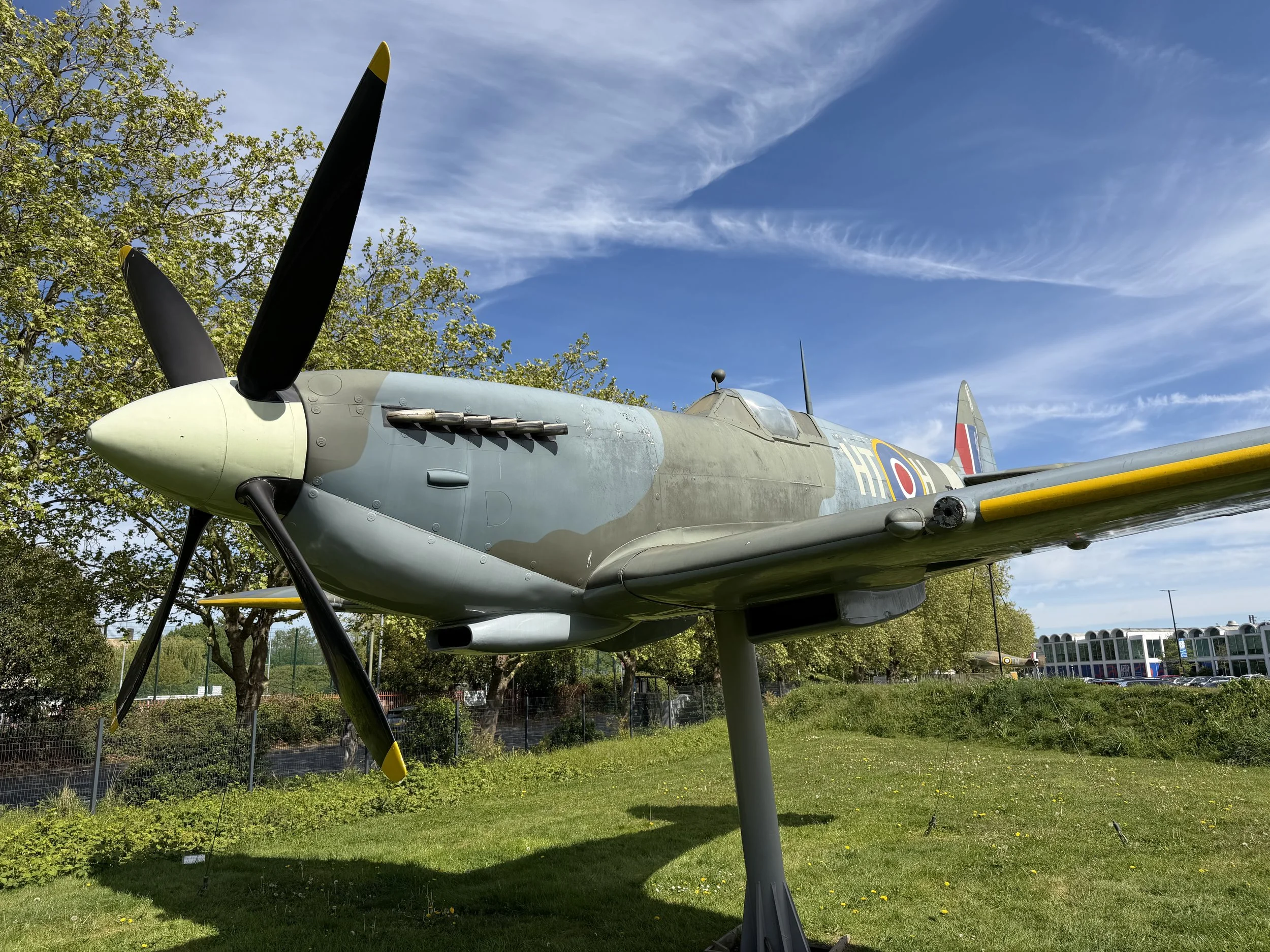
Spitfire on a stick
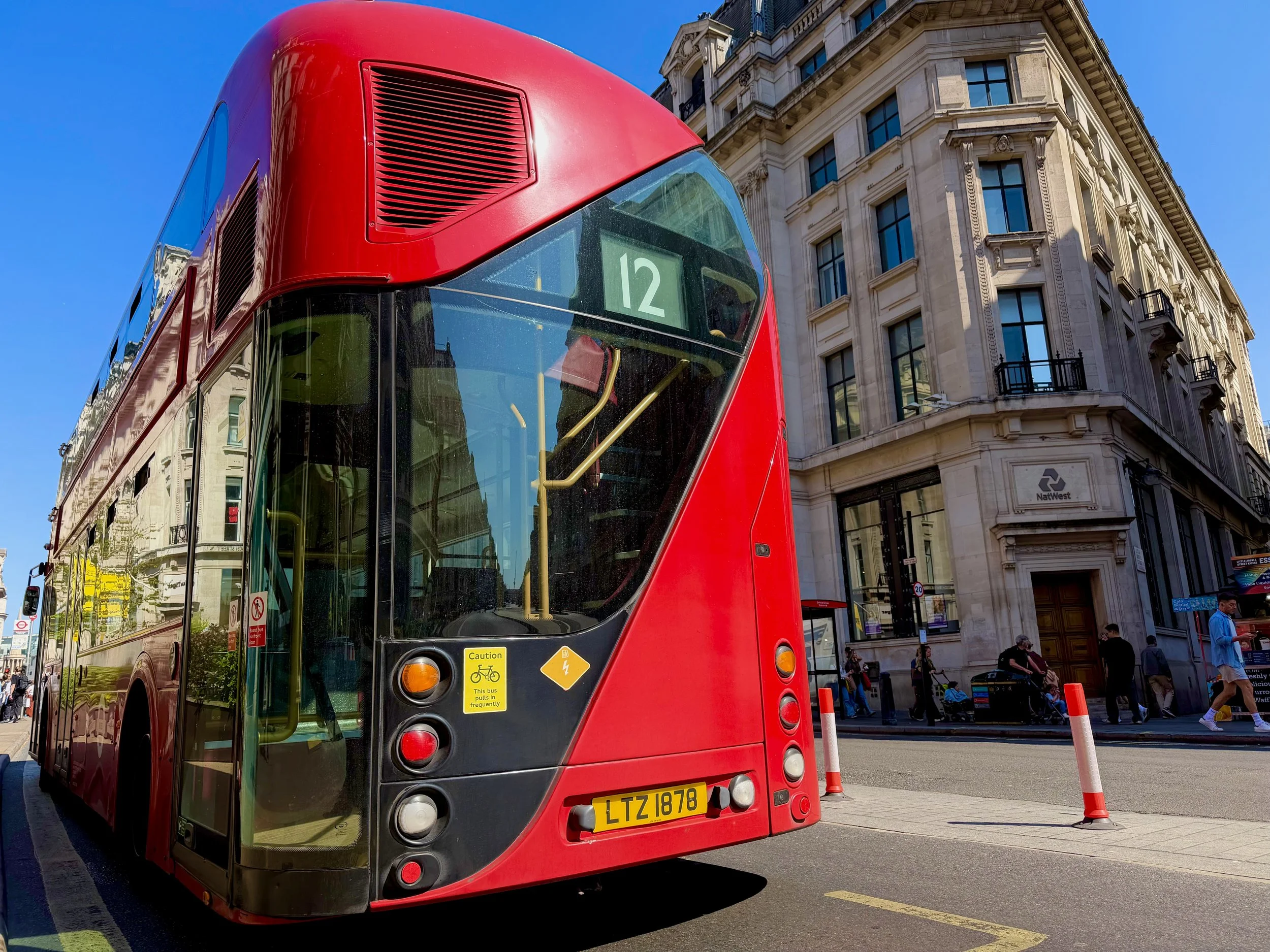
London Color
or the back of a bus
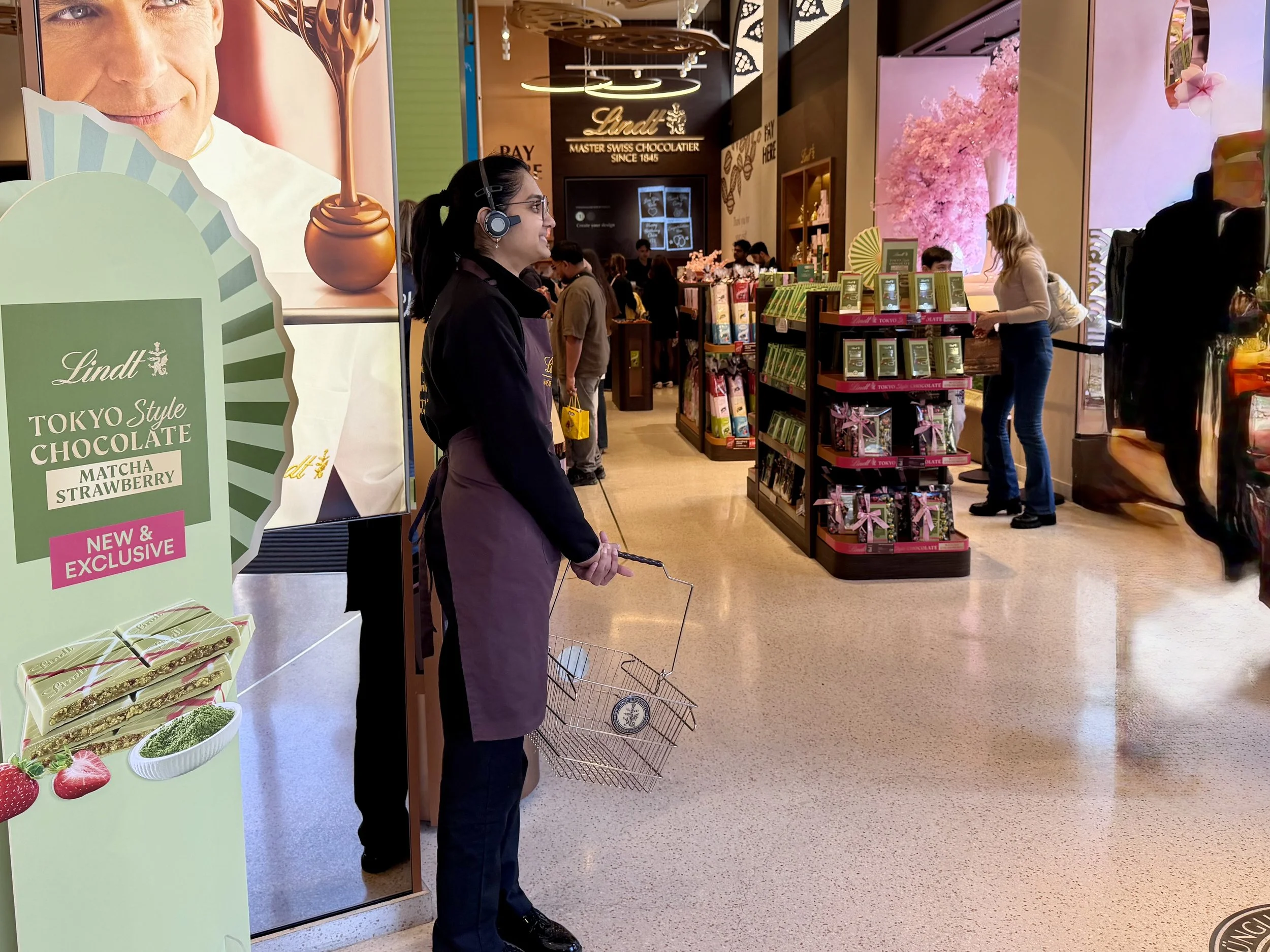
The Lindt Store Greeter
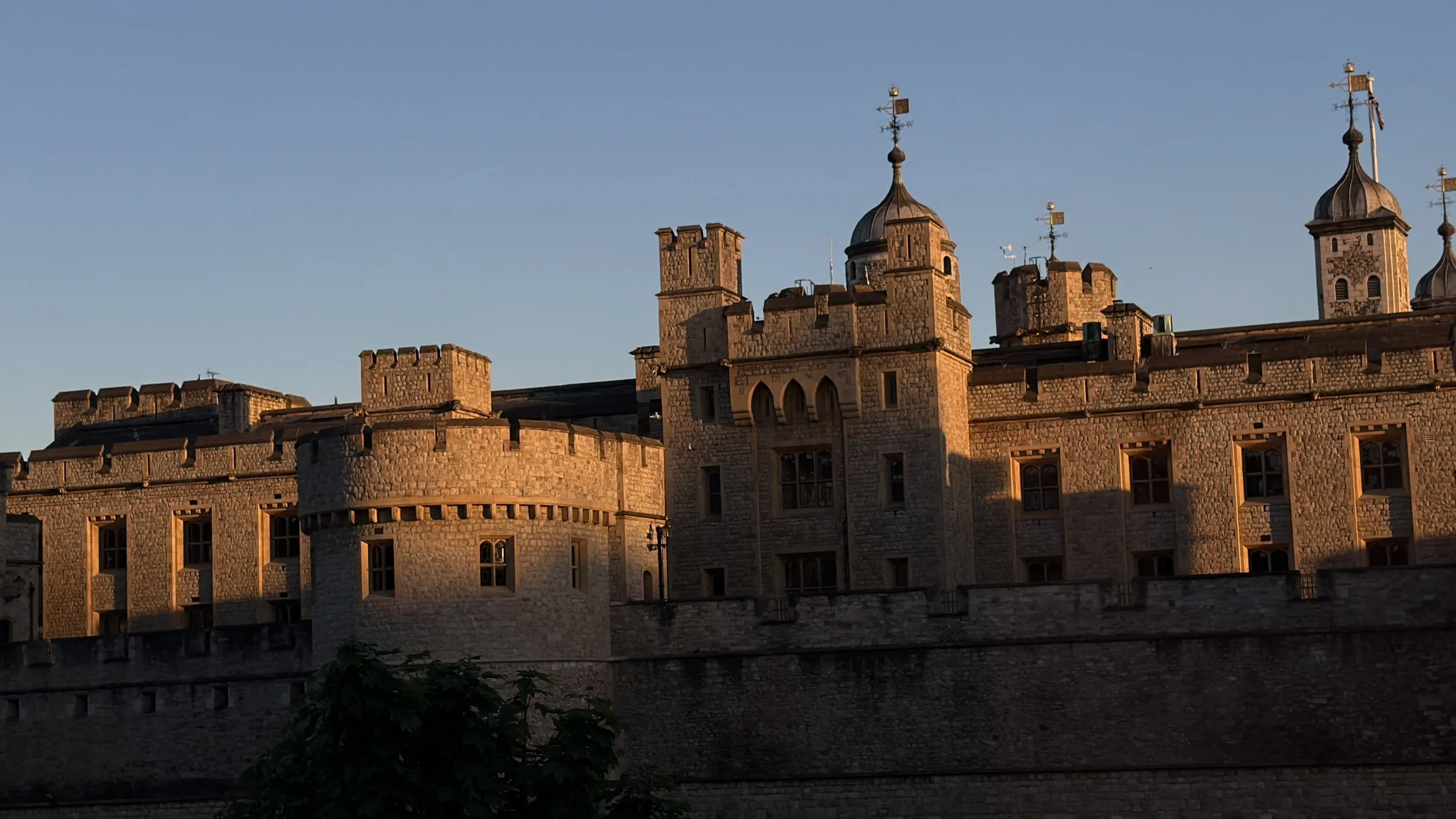
Tower of London
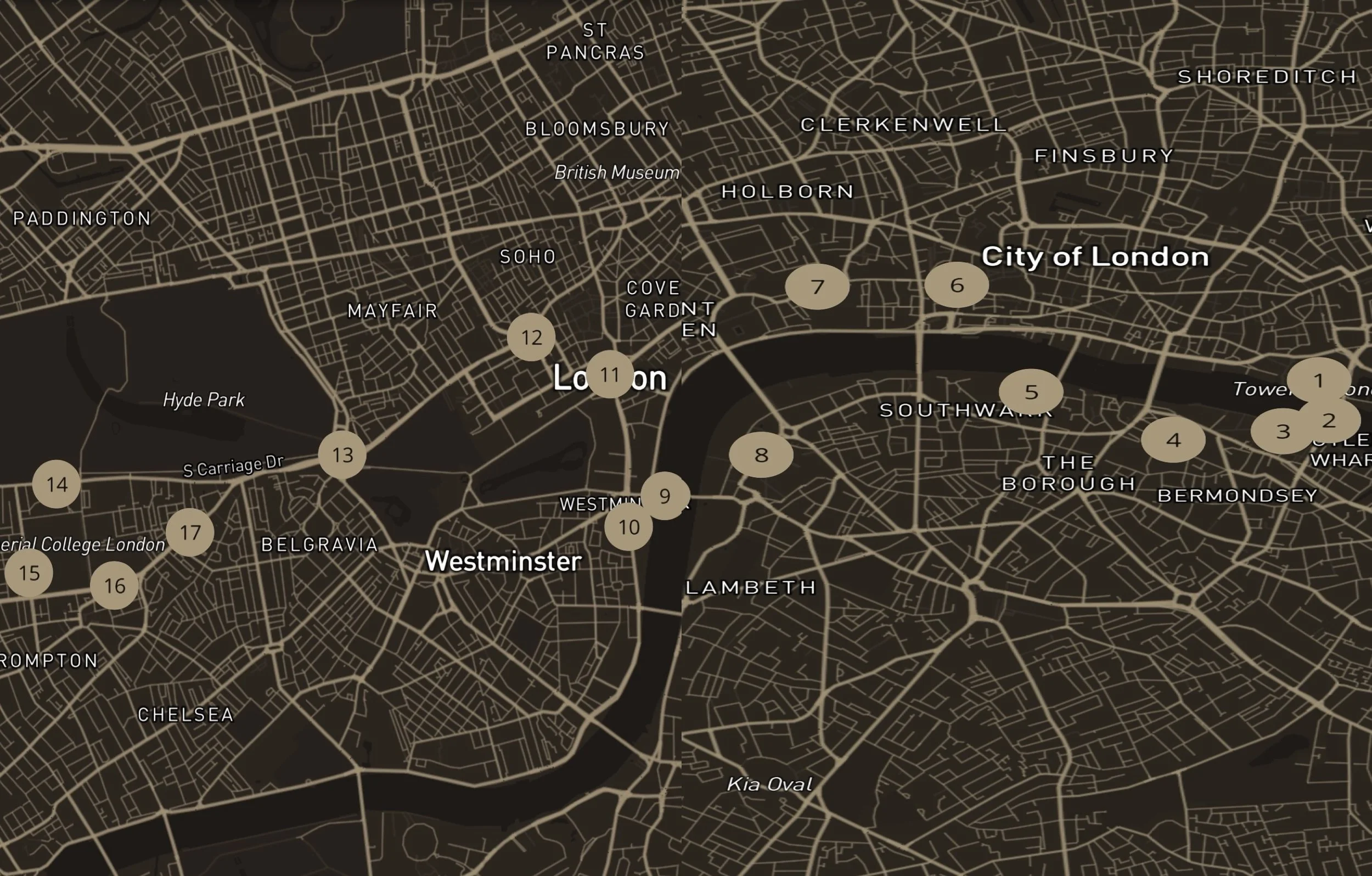
Bustranome Route, starting at the far right, north side of the Thames
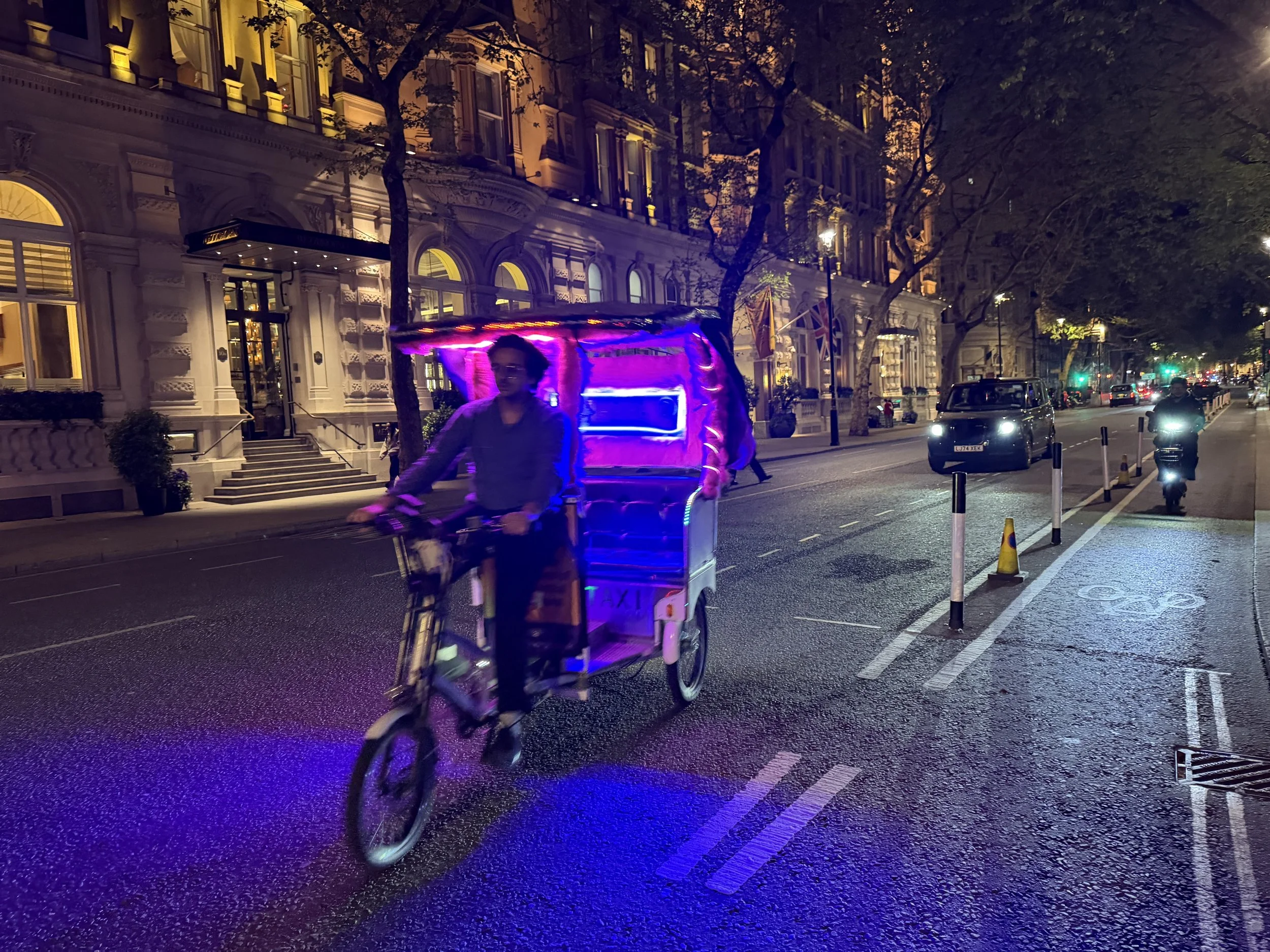
Fluorescent Tuk Tuk
Notable Items
Ole and Steen Danish bakery was a great place to go for baked goods and being warm. The latte suffered because the milk wasn’t steamed sufficiently to produce a froth. That made it espresso with hot milk (and disappointing). I visited several times before concluding that it wasn’t a single latte maker’s issue.
I visited the RAF Museum in Colindale, a former aerodrome north of London. On the Tube ride there, observing the condition of the stations (usually very good, even on the older lines), I thought about the maintenance necessary to “keep up” complex machines and infrastructure. Just like ships, most of the cost comes after they are built.
When maintenance is done well, it is invisible. I know from experience that you don’t get famous as a Navy Engineering Duty Officer doing your job well. Things just look good and work as you expect them to. Buildings, cathedrals, historical buildings, and even Tube stations are regularly being repaired in Europe. In the Mexican cities I’ve visited outside of Mexico City, I haven’t been impressed with the condition of their sidewalks, electrical and fiber optic lines, city roads (potholes that would hide hippos). Most of the infrastructure you can see is in sad shape.
I’m sure every large ancient civilization had the same issue. We just don’t notice it when they are made into tourist attractions after being carved out of the jungle. There is always garbage to dump and human waste to manage in settlements. Population density just makes it a bigger problem.
The RAF museum was spread over six hangars.
H1 was the visitor entrance, museum shop, and introduction
H2 was aircraft and technology up to 1918. They didn’t cover the invention of controlled flight (uncontrolled flight didn’t need inventing, everyone knew what happened when you jumped off a cliff). My favorite exhibit, albeit modest, was the display describing the technology for firing guns from the airplane’s nose without shooting the propellor off (it’s all about cams). A Sopwith Camel display? Yawn.
H3, 4, and 5 had a large collection of WW2 machinery. It had many of the classic RAF fighters as well as pre-war models that were deathtraps in combat. There was one German bomber (not sexy, but England was heavily bombed), and several fighters: a Bf-109, a He162, a Me-163 (the exploding rocket with a human strapped into it). There were also huge sea planes to accompany the British bombers and fighters.
H6 told the story of the RAF 1945 until today. Another yawn. I skipped it.
There were several high-quality audio-visuals to accompany the airframes. My standard for assessing such things is whether they teach me something new. Several did.
A description of the evolution of airpower and world political developments 1920-1939.
The Ruhr dam bombing project (bombs and tactics for using them were specially developed). The RAF lost 50 bombers in the process with no measurable effect on the war. I’m sure it sounded like a good idea at the time.
Sinking the Tirpitz, supposedly hidden in a Norwegian fjord (hiding a battleship, really?)
The need for (and horribly poor accuracy) of night city bombing as well as some of the moral issues (aircrew didn’t receive campaign ribbons until many years later).
There were many display cases of hardware and service personnel uniforms. Many auxiliary vehicles were parked next to the planes.
I took a break during hangar perusing to visit the café building for a rest and lunch. The only USA-like items on the menu were hot dogs and ice cream (that’s international). The only things I noticed that would be available at a US museum café like Gettysburg were egg salad sandwiches.
I returned to the Leicester Square Tube station by 4pm. I wandered around Chinatown and Piccadilly Circus looking for interesting combinations of light and color for pictures. I was trying to apply the How to Take Better Photos with iPhone training before going into the Lindt Store.
At the store, I spoke with the woman on duty as store greeter. Her watch station was in front of one of the displays facing the door. Her mission was to cheerfully greet each person who entered (happy customers buy more). She said that she and her colleagues liked doing it and took it in turns, two hours each. I was inspired to order a Dubai-style chocolate sundae (they’re big on pistachios in Dubai).
The Bustronome gourmet food and London tour experience was from 1930-2100. There is a midday version, but I thought night would be more interesting. There were at least fifteen other people milling about at the bus stop when I arrived. The pre-tour transit and arrival always have uncertainty associated with them (at least for me). It’s not just the “Did I leave early enough?” and “Do I have the meeting point correct?” and “Where is my darn ticket?” questions (I’ve gotten all three wrong in the past). There is also the “Will I recognize the tour guide (bus in this case) when they arrive?” and “Are all these people going on the same tour? We’ll never fit” concerns.
Bustronome is very well organized. They specified the bus stop (London bus stops are numbered) and nearest Tube station. Someone with a clipboard exited one of the two buses and sorted us according to the correct bus. Between the two buses (seating only on the top level, kitchen below), there was plenty of room for the people milling.
Once aboard and seated, the view from my seat was excellent and the bus wasn’t even moving. The table had no-stick placemats and a wooden rack to keep glassware from toppling. The bus drives super slowly so the risk of anything toppling was low.
The tour started on Victoria Embankment going east toward Tower Bridge. It crossed the bridge, went west along the Thames, crossed back and forth across the Thames several times, and returned to where we started ninety minutes earlier and five courses later.