
Highlights-Barcelona Day 4
At Mistral for coffee and a pastry, I was slow to order, so the clerk started speaking English quickly. Not only is my brain old, but I can only be so articulate, regardless of the language, when confronted with a cabinet full of baked goodies. We switched back to Spanish soon enough. I took a food tour led by a woman from Croatia, six others besides me. Five stops: 3 restaurants and 2 stand ups. Food tours in Barcelona always involve sharing wine from a porró. Done badly, you spill wine all over your face! I attended Mass at the Santa Maria del Mar Basilica with a friend. It was a special service with confirmation for 23 adults and 2 (adult) baptisms (pouring, not immersion, is more common).
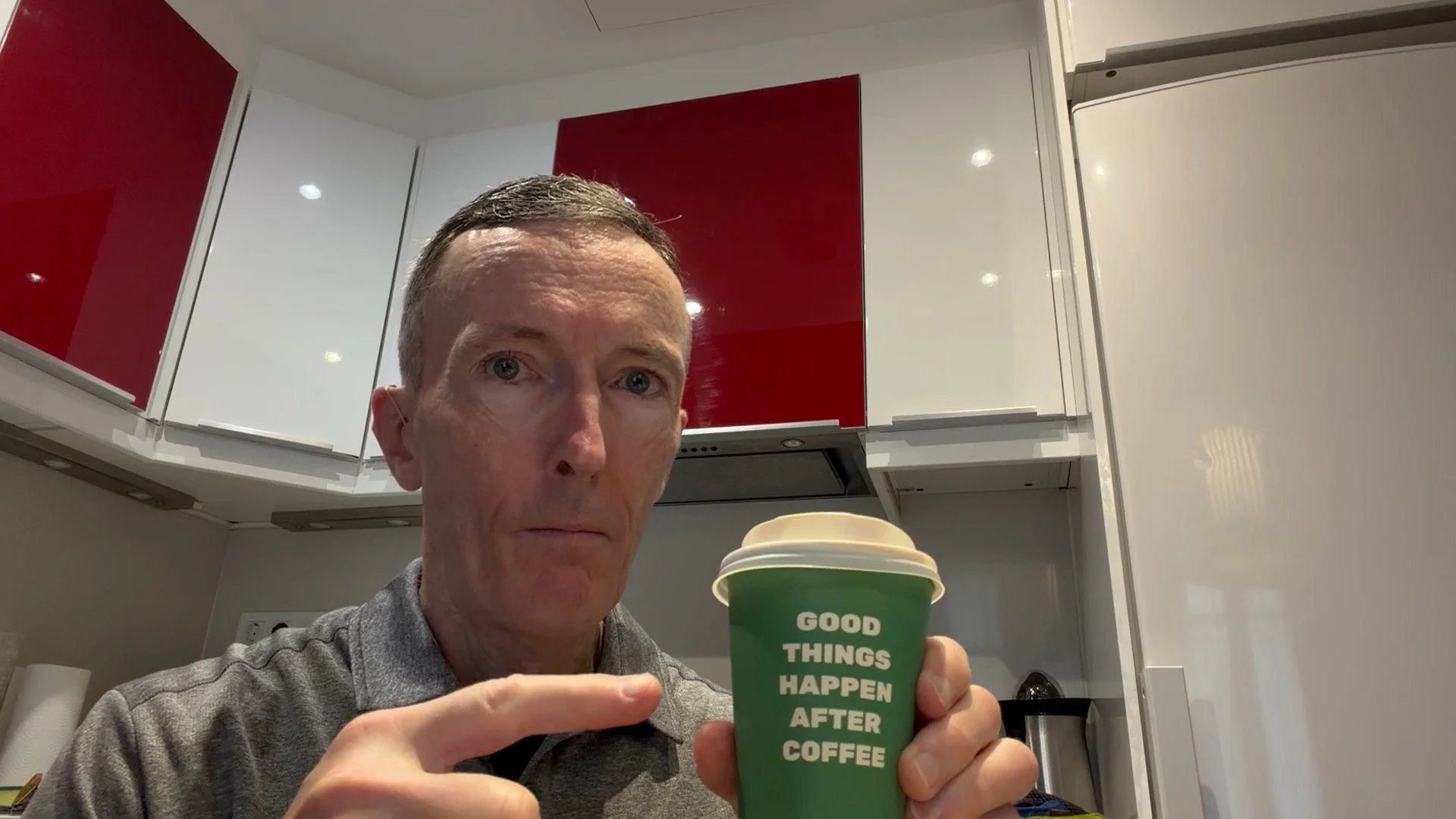
Speaks for itself
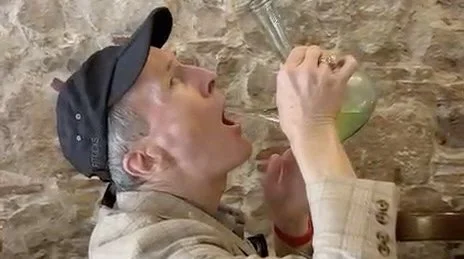
The author vs. a porró
Notable Items
Mistral, where I had my coffee and xuixo, was another bakery and coffee place with a local vibe, frequented by locals. Actually, I don’t think it has a vibe at all. Is no vibe a kind of vibe? That’s like claiming that no answer is “an answer.” No, it’s not. No answer is silence.
I had been to Mistral before (more than once). I don’t go there exclusively when I stay in El Raval, but I like to go there for different reasons than 365. First, it doesn’t get street traffic like 365 so it is quieter. It is bigger than 365 and the chairs are kinder to my body. At Mistral, you pay when you leave. This is common in Mexico. In Spain, not so much.
I don’t feel like a tourist in Mistral. I’m just drinking my café con leche (it’s a cortado in the U.S.), trying not to spill the cream inside the xuixo onto my pants (the tiny, waxy napkins are no defense). Even if I did, the man two tables away reading the newspaper and the couple on the other side of me having their coffees and pastries wouldn’t notice. Mistral isn’t a packaged experience. It feels like I’m integrated into everyday Spanish life. I know I’m not, but the feeling is nice.
The café con leche was part of that. Unlike a latte in the U.S., I could taste the coffee. The steamed milk took the edge off the bitterness and acidity, but I could still taste both. It tasted so delicious that I didn’t want another cup. I didn’t want a twelve ounce beverage, which is what a latte is. It also isn’t an experience.
At noon, I took a food tour I heard about on the Rick Steves podcast (just recordings of his local NPR show, but it works). I was early for the tour, so I sat on a large cube in the square next to Plaça de la Mercè. This is how I got gook on my pants you-know-where, which I only discovered at the end of the day (of course).
The tour leader was Petra, a Croatian. I’ve seen this a lot, non-Barcelonians leading tours in Barcelona. I don’t mind where they’re from if I can understand them.
We went to five eateries: three restaurants and two standup stalls. The first was La Galera, an obligatory stop on food tours. I’ve been there before. It is the place (it might be the only place) to drink from a porró, a glass wine pitcher with a long spout so you can spill wine all over your chest share wine without putting your lips on the pitcher (that used to be a thing in Barcelona). Wine spilling aside, I learn something every time I take a food tour, like the Catalan flag with a star is an unofficial, pro-independence flag.
Post-tour, I met my friend to attend evening mass at Basilica de Santa Maria del Mar in El Born. The Basilica stands apart from others in Spain for several reasons. Rich people donated money for materials and craftsmen donated their labor. It was finished in just fifty-five years. I don’t know what the average construction period is for basilicas and cathedrals, but it can be centuries. The long street on the side of the basilica, Passeig del Born, was a practice zone for jousting.